
Solar, Batteries & EV Charging Incentives in the Netherlands 2026
Thinking about investing in solar panels, a home battery or EV charging infrastructure? Before investing, it is worth checking which subsidies, VAT benefits and tax incentives may be available.
There are several financial incentives available in the Netherlands that could make your investment more attractive. However, the rules differ depending on the technology and whether you are a homeowner or a business.
At Novectra, we help homeowners design and install complete energy systems, combining solar generation, battery storage, EV charging and smart energy management.
In this guide, we explain the most relevant Dutch subsidies, VAT benefits and tax incentives for solar panels, home batteries and EV chargers in 2026.
Solar panels: 0% VAT for homes
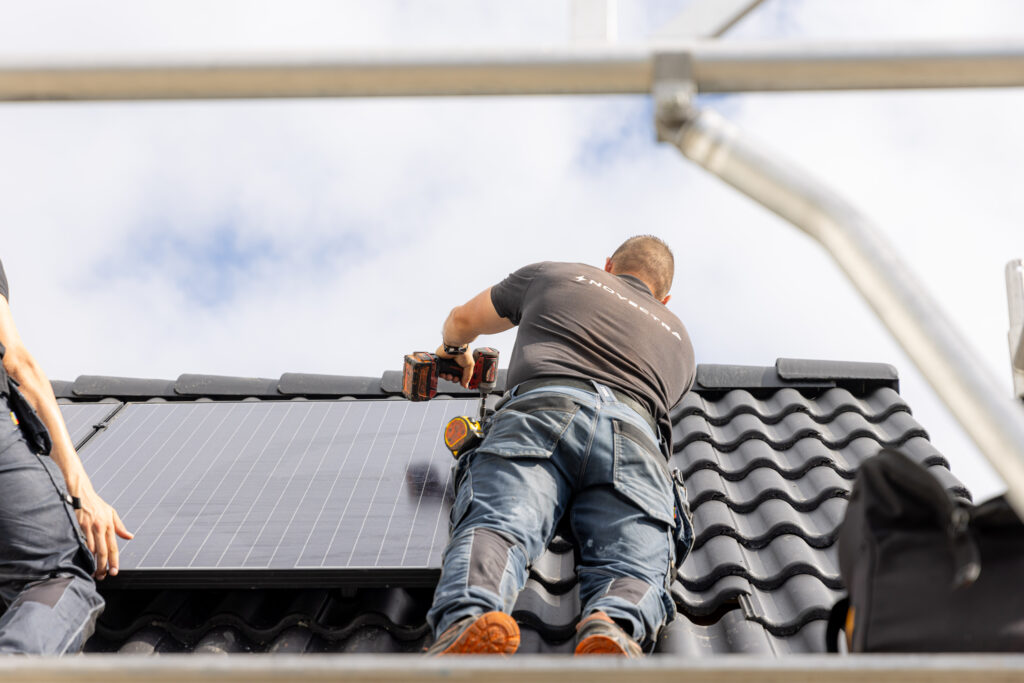
For homeowners, one of the simplest financial benefits is the 0% VAT rate on solar panels.
The supply and installation of solar panels on or near a home are subject to 0% VAT. This means that homeowners generally do not have to pay VAT on the solar panels and their installation in the first place.
However, the 0% VAT rate does not automatically apply to every part of a solar installation.
For example, certain additional work or equipment may still be subject to the standard VAT rate. A replacement inverter, for example, is not automatically covered by the 0% rate when it is supplied separately.
This makes it important to look at the complete quotation rather than simply assuming that every item connected to a solar installation is VAT-free.
Can you reclaim VAT on a home battery?
The VAT treatment of home batteries is more complicated.
Under certain conditions, homeowners can reclaim the VAT paid on the purchase and installation of a home battery.
However, you cannot simply buy a battery and automatically reclaim 21% VAT.
The Dutch Tax Administration has specific requirements.
To qualify, the battery must be used for the purchase and sale of electricity. It must also have an Energy Management System (EMS) that enables electricity trading, and you need a dynamic energy contract.
The battery and energy contract must be in your name, and you cannot be participating in the Dutch small businesses VAT scheme (KOR) at the time of purchase and installation.
In other words, the VAT arrangement is linked to the way the battery is operated.
What about VAT on electricity trading?
There is an important consideration here.
If you reclaim VAT on the battery because you are trading electricity, you become liable for VAT on the compensation you receive for electricity supplied back to your energy company.
The Dutch Tax Administration states that 21% VAT must be declared on this compensation.
If the battery is also used privately, VAT may need to be paid on that private use as well. The amount depends on the actual use of the battery and the applicable VAT rules.
The key takeaway: VAT recovery can make a battery financially attractive, but it is not a simple 21% discount. The complete VAT position should be considered before purchasing the system.
Is there a Dutch government subsidy for home batteries?
This is one of the most common questions we receive.
At present, there is no general national purchase subsidy for home batteries for private homeowners comparable to some of the subsidies available for other sustainable technologies. However, local subsidies or financial incentives from your municipality may be available.
Municipalities and local authorities can offer their own sustainability programmes, grants or incentives, and these can change over time. Depending on where you live or where your business is located, there may also be local or regional subsidies for measures such as:
- energy efficiency;
- renewable energy;
- charging infrastructure;
- sustainable buildings;
- energy storage;
- or local energy projects.
The availability and conditions vary between municipalities and provinces.
For this reason, it is always worth checking the schemes available in your specific area before investing.
Which financial incentive applies to you?
There is no single answer. It depends on your situation, your investment and how the technology will be used.
Which financial incentive applies to you?
There is no single answer. It depends on your situation, your investment and how the technology will be used.
| Investment | Homeowner |
| Solar panels | 0% VAT |
| Home battery | VAT recovery possible under specific conditions |
| EV charger | Generally no national purchase subsidy |
| Battery for EV charging | Usually no national purchase subsidy |
| Energy management system | Usually part of a wider installation |
| Grid flexibility measures | Limited |
| Large-scale solar | Generally not applicable |
How Novectra can help
Understanding subsidies and tax incentives can be complicated, particularly when several technologies are combined.
At Novectra, we can also help you identify which financial incentives may be relevant to your project, so you can make an informed investment decision. Want to know which options are available for your home?
Disclaimer: This article provides general information about Dutch subsidies, tax incentives and VAT rules in 2026. Eligibility depends on the specific circumstances and technical specifications of each project. Regulations and available budgets can change. Always verify the current conditions with the Dutch Tax Administration (Belastingdienst), the Netherlands Enterprise Agency (RVO) or your tax adviser before making an investment.